
Mandatory Vendor Building Inspections in Victoria: A Good Idea That Needs to Get the Detail Right
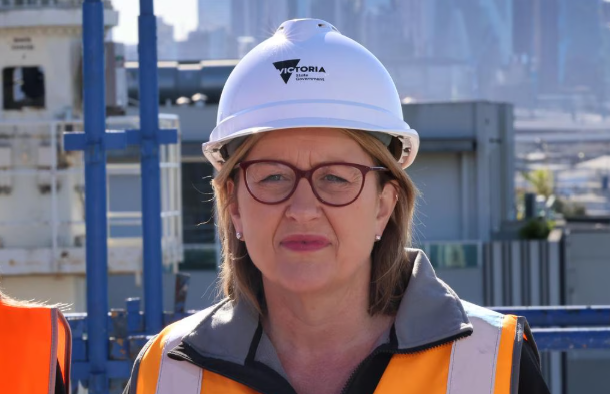
The Jacinta Allan government has put housing affordability at the centre of its pitch for the state election in November
Last week the Allan Labor Government announced it would require property vendors in Victoria to pay for building and pest inspections before sale, making those reports available to all prospective buyers. Legislation is flagged for 2027 if Labor is re-elected, modelled on the ACT's existing mandatory scheme.
As a forensic structural engineer who spends most of his working life investigating what went wrong with buildings after someone has already bought them, my first reaction was: it's about time.
But my second reaction, almost immediately after, was the detail of how this scheme is designed will determine whether it actually protects buyers or just gives them a false sense of security.
Here's my take.
The Problem Is Real
The government's own figures say 17 per cent of Victorian buyers are purchasing property with no building or pest inspection at all, often because of the cost and hassle of arranging one, especially when you're competing for multiple properties and might miss out after spending hundreds on reports for homes you don't end up buying.
I see the consequences of this regularly. Homeowners who discover cracking, structural movement, failed waterproofing, or concealed defects months after settlement, with no pre-purchase baseline to fall back on. By that point, the vendor has moved on and the buyer is left with a rectification bill and no leverage.
Shifting the cost to the vendor and making reports available to all buyers removes a genuine barrier. In principle, I support it.
But Here's Where It Gets Complicated
The biggest risk with a vendor-paid inspection scheme is conflict of interest. When the vendor pays for the report, there is an inherent commercial pressure, even if unintentional, for the inspector to produce a result the vendor is comfortable with. A report that flags too many issues might not help the sale. An inspector who consistently produces conservative, heavily caveated reports might find themselves recommended less often by agents.
The government has acknowledged this, saying the scheme will include "safeguards to prevent low-quality reports or conflicts of interest." That's the right instinct. But safeguards on paper and safeguards in practice are two different things, and this is where the consultation process needs to be rigorous.
The ACT model, which Victoria says it will consult on, allows vendors to recover the cost of the inspection from the purchaser after contracts are signed. That's a sensible mechanism, but it doesn't address the selection bias: the vendor still chooses the inspector.
A Standard Building Inspection Is Not a Structural Engineering Assessment
This is the point I think most people will miss in the public discussion, and it's the one I care about most.
A standard pre-purchase building inspection conducted under AS 4349.1 is a visual, non-invasive assessment. The inspector walks through the property, looks at accessible areas, and reports on visible defects. It is a useful document and it catches a lot of obvious problems.
But it has real limitations. The inspector does not open up walls, lift floor coverings, enter confined subfloor spaces where access is restricted, or assess concealed structural elements. The report is not a compliance audit against the National Construction Code. It does not assess structural adequacy, analyse crack patterns against engineering standards like AS 2870, or provide an engineering opinion on cause and mechanism of damage.
For many straightforward properties, a standard building and pest inspection is perfectly adequate. But for older homes with visible cracking, properties on reactive soils, homes that have had extensions or renovations, or any dwelling where structural questions arise, a standard inspection will often flag the symptom but not diagnose the cause.
If this scheme creates a perception among buyers that a vendor-supplied building report means the property has been "structurally cleared," that's a problem. It hasn't. It's been visually inspected by a building inspector. That's a different thing.
What I'd Like to See in the Scheme Design
As someone who works across forensic investigation, structural assessment, and insurance engineering, here's what I think the Victorian Government should consider as it develops the scheme:
Clear disclosure of scope and limitations. Every vendor-supplied report should include a plain-language cover page explaining exactly what the inspection does and does not cover, and an explicit statement that the report does not constitute a structural engineering assessment. Buyers need to understand what they're getting.
Inspector independence requirements. The inspector should not be recommended or selected by the selling agent. Ideally, inspectors would be drawn from a panel or register, with random or rotating allocation, to reduce the commercial relationship between agent, vendor, and inspector.
Minimum qualification standards. The announcement references the ACT requirement that inspections be conducted by "professionals who meet key requirements" and in line with the relevant Australian Standard. That's a start, but the scheme should be explicit about what qualifications are required. A registered building practitioner conducting an AS 4349.1 inspection is not the same as a chartered structural engineer conducting a structural condition assessment. Both have a role, but they're different products.
A pathway to supplementary structural assessment. Buyers should retain the right to commission their own independent inspections, including structural engineering assessments, and the scheme should make this clear. The vendor-supplied report should be a floor, not a ceiling, for due diligence.
A mechanism for flagging structural concerns. If a building inspector identifies cracking, movement, or other indicators that suggest a structural issue beyond the scope of a visual inspection, the report should include a mandatory recommendation for further structural engineering investigation rather than a soft caveat buried in the limitations section.
What This Means for Homebuyers
If this reform goes ahead, and I think it should, here's my practical advice:
Read the vendor-supplied building report carefully, but understand its limitations. It's a starting point, not the final word. If the report flags cracking, movement, moisture, or structural concerns and recommends "further investigation," take that seriously. That recommendation exists because the inspector has identified something beyond the scope of what they can assess.
If you're buying an older home, a property with visible cracking, or a home that's been renovated or extended, consider commissioning your own independent structural assessment from a qualified structural engineer, regardless of what the vendor's report says. The cost of a structural assessment is a fraction of the cost of discovering a foundation problem after settlement.
And remember: even under the new scheme, the vendor-supplied report is prepared by someone the vendor chose and paid for. Your own independent assessment is the only one that's unequivocally in your corner.
Final Thought
This is a positive reform. Anything that reduces the number of Victorians buying property blind is a step in the right direction. But the building inspection industry in Australia is broad, the scope of a standard inspection is often misunderstood, and the conflict of interest risk in a vendor-paid model is real.
The consultation process matters. Industry bodies, engineers, building surveyors, and consumer advocates all need to be at the table. If the scheme is designed well, it will genuinely protect buyers. If it's designed loosely, it risks becoming a compliance tick that provides a false sense of security.
I'll be watching the consultation closely, and DORSIA Engineering will be engaging through our industry channels, including the Forensic Engineering Society of Australia and Engineers Australia, to make sure the engineering perspective is represented.
If you're buying property in Victoria and want an independent structural assessment that goes beyond a standard building inspection, get in touch. That's what we do.
Jordan Karantonis is the Managing Director and Senior Forensic Engineer at DORSIA ENGINEERING, a Melbourne-based forensic, structural and civil engineering consultancy. He is a member of Engineers Australia, the Forensic Engineering Society of Australia (FESA), and holds National Engineering Registration (NER).
DORSIA ENGINEERING provides independent structural condition assessments, building defect investigations, and forensic engineering services across Melbourne and regional Victoria.
dorsia.au | info@dorsia.au